A Day in Glasgow

Saturday morning, I took the train to Glasgow, the largest city in Scotland. I envy the train system Europeans enjoy on a daily basis. No need to arrive two hours beforehand, no lines to wait in, no security. I chose Saturday for my visit because Young Scots for Independence, the national youth branch of the Scottish National Party, was holding its annual conference at University of Strathclyde Glasgow. As my mentor and I discussed leading up to this summer, young people are an interesting demographic to study as they will be disproportionately affected by Brexit, especially as seekers of employment at the present or in the near future. As some of the event was for members only, I attended the public segment where members proposed a number of policy resolutions for the organization to consider. Here are a few I witnessed, all of which were adopted and offer insights into issues that matter to pro-independence youth in Scotland. I am presenting the arguments as discussed at the conference, and they do not necessarily represent my own opinions.

The Emily Test

This resolution supports the introduction of a nation-wide program based on the Emily Test, a campaign recently implemented across several universities in Scotland which provides information about support resources to victims of sexual assault and other forms of gender-based violence. This specific resolution is unrelated to the independence movement, but it is still interesting as it signifies a parallel in focus on combating assault on campuses in America today.

Rent Controls

As in many urban areas, rising rent is a real problem for many. Whether due to gentrification or other market forces, affordable housing can be hard to come by. This resolution supports the implementation of stronger rent controls, protecting residents from the pressures of rising costs of housing. The resolution clearly prioritizes government control over the free market, explaining that prices should be based solely upon quality of housing as opposed to market forces. Housing is a devolved power, so the Scottish government does have the ability to exert greater control over this subject.

Scottish National Transit Authority

This resolution calls for the Scottish government to consider establishing a publicly-owned Scottish National Transit Authority which would operate and regulate transportation within Scotland. This step, in effect nationalizing all transportation services in Scotland, would require action from the UK Parliament, as some power related to transportation and other relevant areas still rest with the UK government. There was also discussion about adding a clause dedicated to walking, cycling, and other forms of “active transportation.” The SNP believes more needs to be done to combat climate change, and I sensed that there was dissatisfaction in the room related to the current efforts and abilities of the Scottish government to tackle this issue. A number expressed beliefs that an independent Scotland would be better able to address climate issues.

Exploring Glasgow

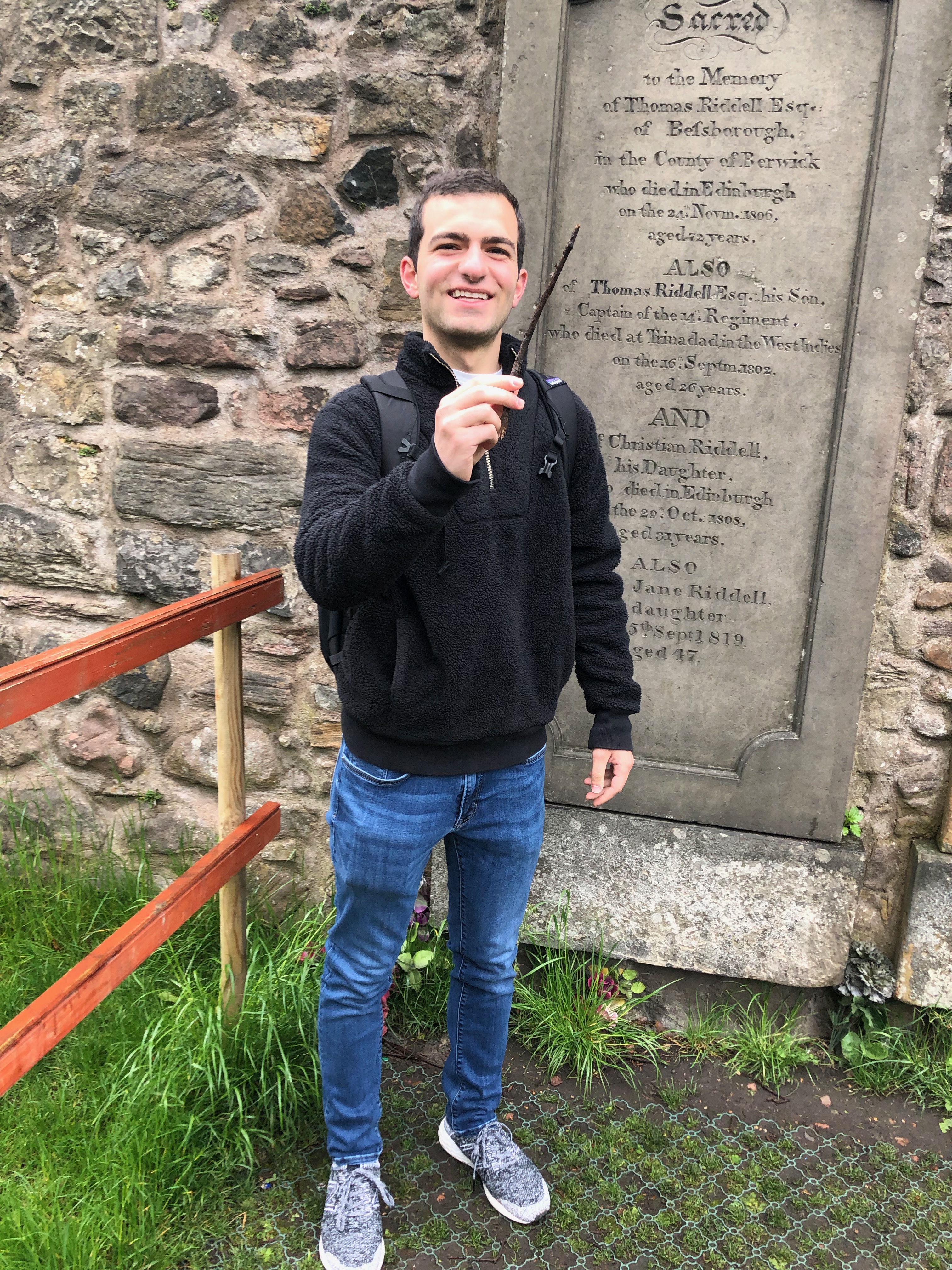
In addition to the attending the conference, I also spent several hours exploring Glasgow. The highlight was the Glasgow Cathedral and the adjacent Glasgow Necropolis, a massive cemetery in the heart of the city. Here is a short clip I made from videos I took. I hope you enjoy!

Three Days in the Scottish Parliament

First Minister Nicola Sturgeon flashing postcard sent before election in heated exchange with a Conservative MSP during Wednesday’s debate. Credit: Getty Images.

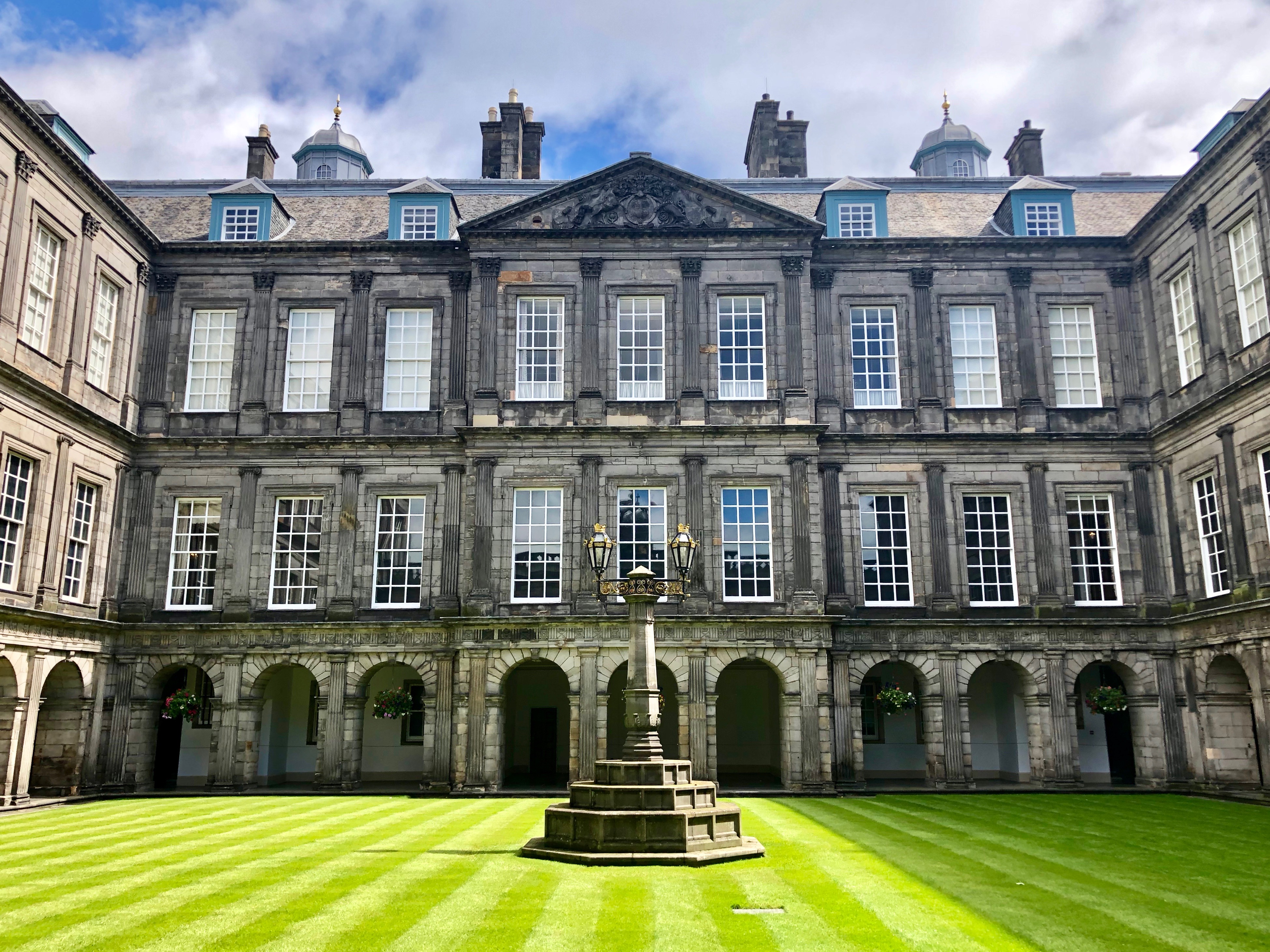
The weather has been quite dreary this week, but luckily it coincided with the three days I scheduled to spend in the Scottish Parliament. As I mentioned in the previous post, I toured the Scottish Parliament Building on Monday. Just celebrating its 20th anniversary, this parliament is one of the youngest in the world.

An Anticlimactic Start

On Tuesday, I managed to reserve a seat in a parliamentary committee meeting. The Scottish Parliament is unicameral, made up of only one chamber, and relies on separate committees of members to propose and consider new legislation, lead inquiries, and consider petitions from the public.

I chose to sit in on the Devolved Powers and Law Reform Committee, as it was set to discuss the European Union Withdrawal Act. Little did I know that the committee would vote to discuss the matter in private, just minutes after I arrived. After hearing the agenda and some chatter, I was escorted out for the remainder of the meeting. This was disappointing, but I am still impressed by their attempt at transparency, making room for a foreign college student to stop by.

Perfect Timing

Today’s visit to the Debating Chamber made up for yesterday’s lack of excitement. After clearing security and collecting my ticket, I entered a packed public viewing area. Usually the space is sparsely occupied, but today the Scottish National Party’s government announced the framework bill for a second independence referendum, the topic I came all this way to study! Cabinet Secretary Michael Russell delivered a speech, titled “Next Steps on Scotland’s Future,” outlining their plan to give Scottish people the choice to leave the UK. In reference to his party’s overwhelming victory in the recent EU election, Russell declared, “Last Thursday, Scotland said loudly and clearly that it is a European nation and that it intends to remain one.” Throughout the speech, members of the Conservative Party, which is opposed to independence, moaned, taunted, and laughed at Russell.

Afterwards, in a question for Russell, Conservative Adam Tomkins attacked the Cabinet Secretary and First Minister Nicola Sturgeon (who was in attendance). He asked why the speech focused on independence rather than more pressing matters such as recent failures in the nation’s healthcare system. He called the proposed bill evidence of “Nicola Sturgeon’s pet obsession with independence.” During the debate, there was also a good deal of nervous talk of a “No-Deal Brexit,” a situation in which no trade partnership with the EU is agreed upon by the time of Brexit. This would likely be disastrous for the Scottish economy, and the SNP government made assurances that it is taking measures to lessen the potential blow of such a situation (for example, by stockpiling certain imported medications). There were a number of illuminating questions and arguments made during the session, but I will leave it at this for now. Here is a link to the debate if you are interested in watching.

I also witnessed a much longer debate on the topic of keeping manufacturing jobs in Scotland and ensuring a just transition away from fossil fuels to wind energy, but I will discuss this in a later entry. I should note that I am also exploring the city as a tourist, but I just haven’t had time to mention all of my explorations in these posts. Yesterday, on my way to the Scottish National Gallery, I ran into an older gentleman with a Duke hat. He introduced me to his daughter who is a Duke alumna and current employee, and I shared the details of my summer and why I decided to spend it in their home country. We live in a small world. Below, I will leave you with a few photos of other discoveries from the last several days.

Understanding the Scottish Political System

Election signage outside a voting location on EU Election Day last week. The SNP outperformed all other parties.

In this post I hope to share my understanding of the political system in Scotland. Yesterday, I toured the Scottish Parliament and learned a lot about the history and structure of the political system. First, it is important to understand the key players in the political landscape. Below is each political party holding at least one seat in parliament with a brief description:

Conservatives: Right-wing political party. One of three largest in membership in the UK (behind Labour and SNP), this party is against Scottish Independence and in favor of Brexit.

Liberal Democrats: Moderate political party against Scottish Independence with quite small membership.

Labour: Left-wing political party against Scottish Independence.

Scottish National Party: Left-wing nationalist party in favor of Scottish Independence on Scottish Independence and against Brexit. Currently in control of the Scottish Parliament and the government, with leader Nicola Sturgeon serving as First Minister of Scotland.

Green Party: Left-wing party in favor of Scottish Independence. Fourth largest party in Scotland.

Following the passage of the Acts of Union in 1707, Scotland’s original parliament adjourned and the country joined what has become the United Kingdom. In 1997, nearly 300 years later, the people of Scotland overwhelmingly voted in favor of the re-establishment of a Scottish Parliament. The new parliament holds certain “devolved” powers, including health and social services, education, and housing, while leaving “reserved” powers, including foreign policy, national defense, and immigration, to the UK.

The Scottish Parliament’s debate chamber, symbolizing cooperation and transparency.
Photo credit: Scottish Parliament (no photos allowed inside).

The Scottish Parliament has 129 representatives, called MSPs, elected to 5-year terms. One member is selected as the Presiding Officer (PO), similar to the Speaker of the House in the United States, though upon assuming the position, the PO revokes their party membership and pledges impartial leadership. The seats of Parliament are allotted in two ways, “first past the post” and “proportional representation,” and citizens vote for specific candidates and political parties. Without delving into the complexities, this system results in a politically diverse parliamentary body, unlike the U.S. Congress which is elected solely through a winner-take-all (first past the post) system and primarily consists of two parties.

The Scottish pride themselves on creating a parliament with diverse representation and transparency. The Scottish Parliament Building, completed in 2004, is a rather surprising and unusual structure. Consisting almost entirely of locally-sourced concrete, wood, and glass, most meeting rooms and the debating chamber are contained by glass walls, signifying transparency and openness. Furthermore, each Scottish citizen has 8 representatives, increasing the likelihood of sharing party affiliation with at least one.

The organic structure of the parliament building is somewhat controversial amongst locals.
Photo Credit: ArchDaily.

I hope to share more about my experiences in the Scottish Parliament in future entries, as I will be returning to observe a Delegated Powers & Law Reform committee meeting and full-body debate in the coming days.

Hello Scottish Borderlands, Goodbye Theresa May

Theresa May: No Brexit, So I’ll Exit

Yesterday, during my trip to the Scottish Borderlands, Theresa May announced her resignation as Prime Minister of the UK in an uncharacteristically emotional address. May explained that she did “her best” to deliver Brexit, a primary focus during her short tenure, but ultimately failed. The announcement sparked a flurry of activity across the political spectrum, with the opposing Labour Party demanding a General Election to select the next Prime Minister. The First Minister of Scotland, Nicola Sturgeon, supported this request, potentially aligning her party (SNP) with Labour in the event of an election. The only problem: Labour does not support a second referendum on independence in Scotland, a key objective of Sturgeon and the SNP. Furthermore, May’s Conservative Party could avoid a General Election altogether and self-select their next leader, who would take over as Prime Minister. If this seems messy, it is, and I am not sure anyone knows what will ultimately happen at this point.

My tour guide, born and raised in Edinburgh, openly shared his opinions on Brexit and the PM. He did not approve of Theresa May’s leadership and the Conservative Party policies she championed. He shared feelings of disenfranchisement with the political system in the United Kingdom, saying that politicians have been putting party over country for far too long. He emphasized the importance of the democratic selection of leadership, invoking the American electoral system as an example.

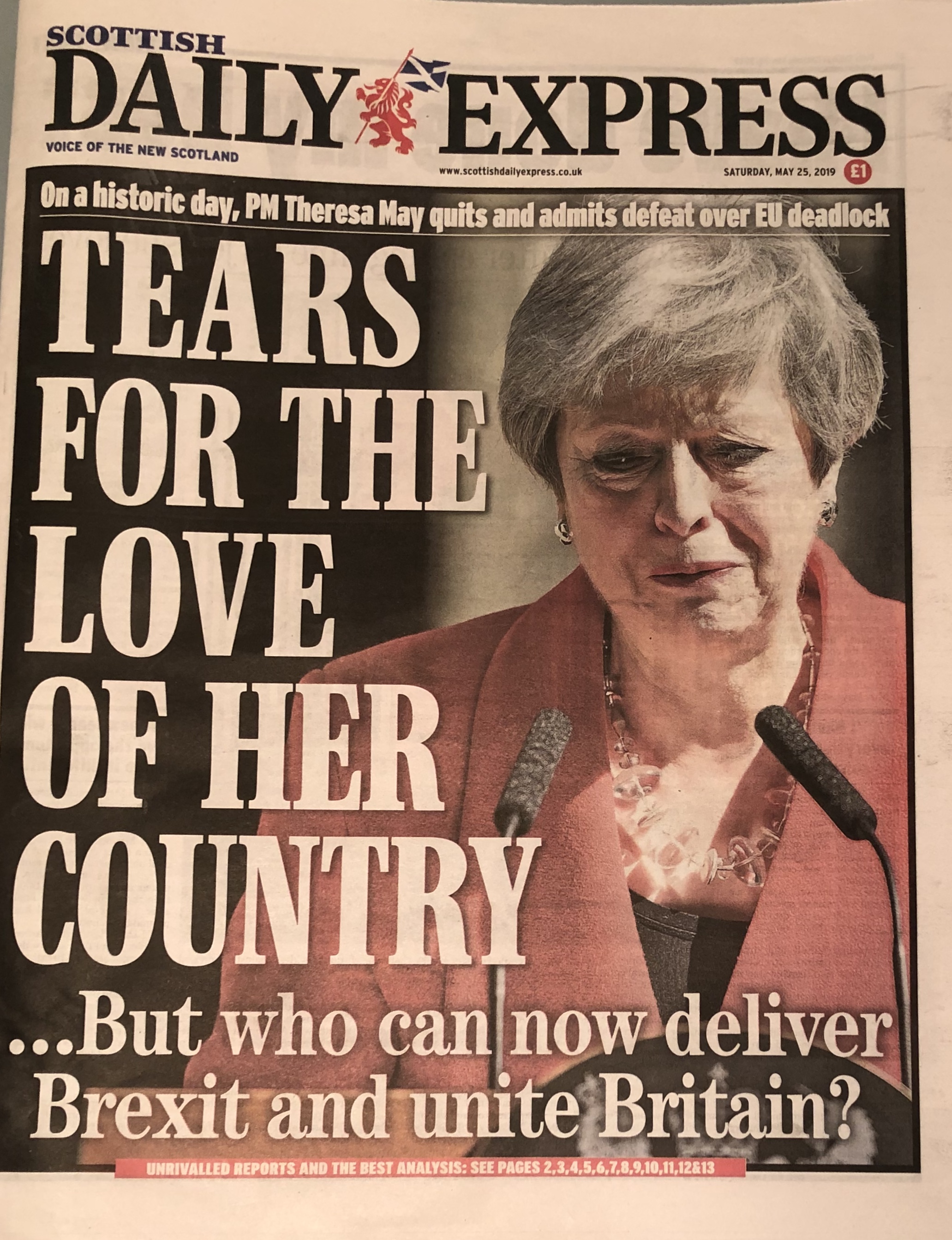
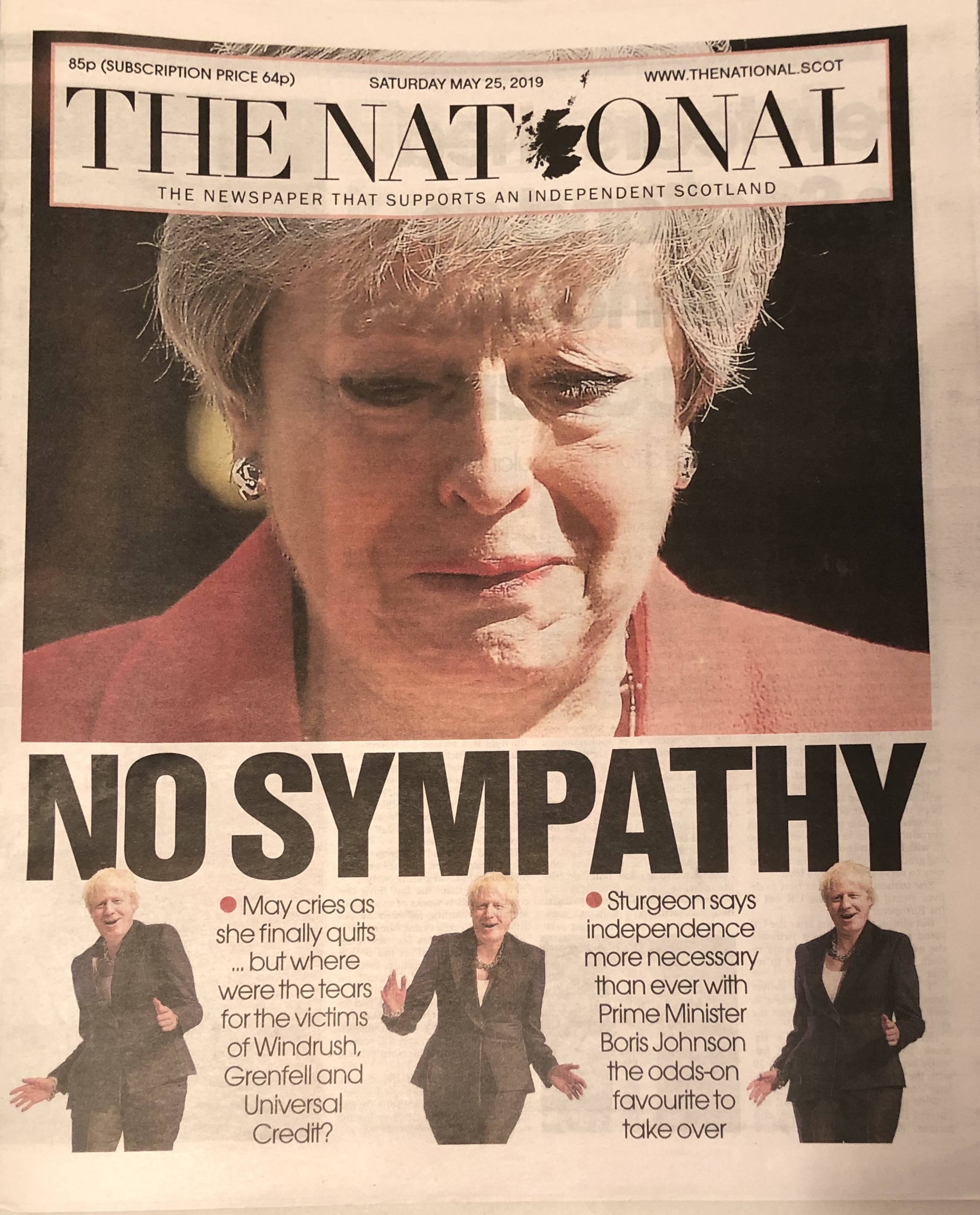
Below you will find two photos of newspapers I picked up this morning from the local grocery store. To the left is the Scottish Daily Express, a conservative right-wing publication. To the right is The National, Scotland’s pro-independence and left-wing publication. Notice the difference in the headlines. I will continue to follow developments relating to this leadership change and what it means for the independence movement in Scotland.

Scottish Borderlands

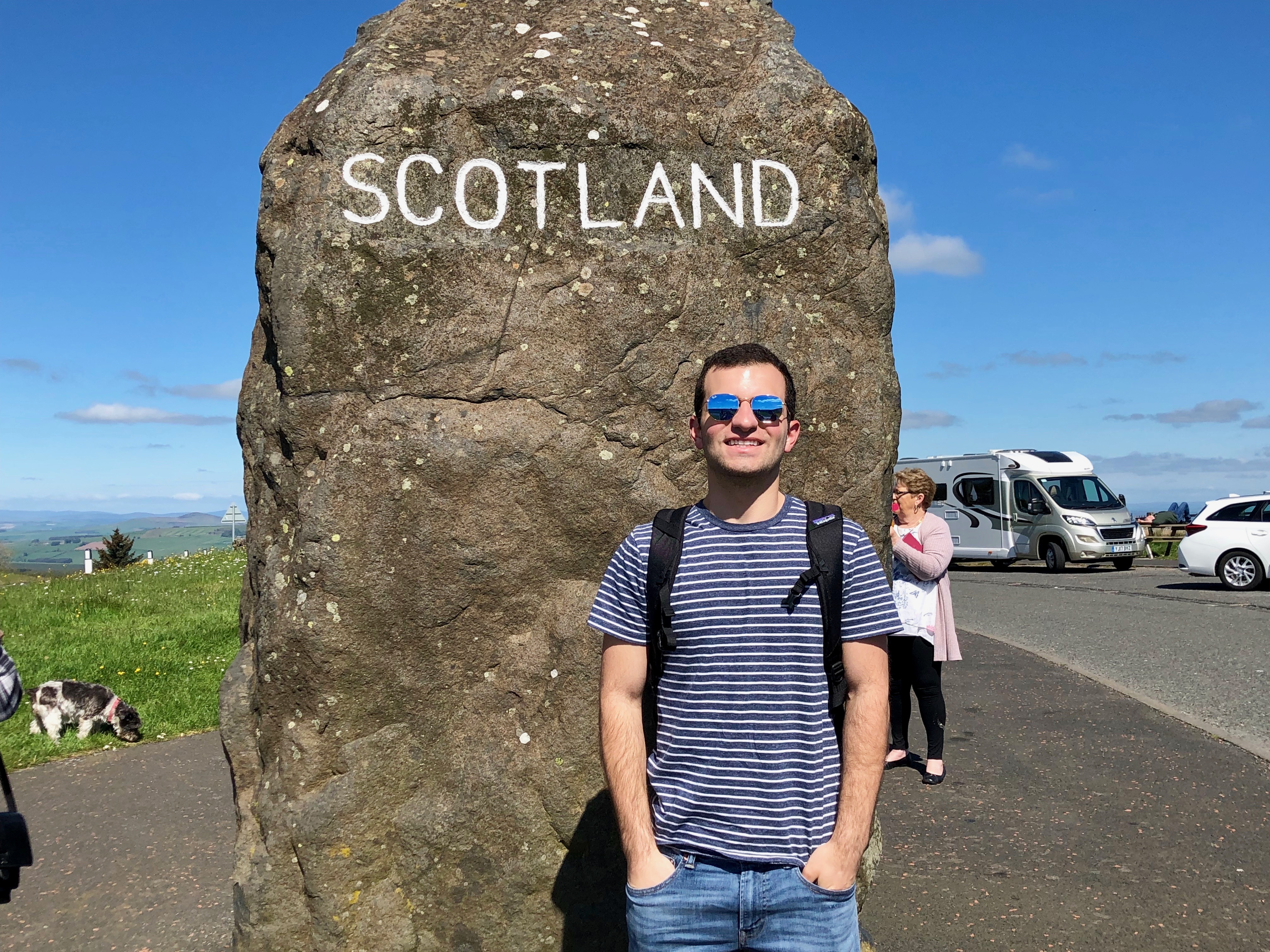
As I mentioned, the news of May’s departure broke while I was on my way to the Scottish Borderlands, the region in Scotland just north of the English border. During the trip, I hoped to collect more information on the relationship between the two countries. Ultimately, the tour focused much more on ancient history than modern. As we crossed the border, we stopped at a stone which marked the border between the two countries. As the United Kingdom is “united,” there is absolutely no infrastructure at the border crossing besides the boulder pictured below. Controlling the many access points across the lengthy border would be one of many things the Scottish government would have to consider should it formally separate from the UK, especially if Scotland remained in the EU and the new Scotland-less UK did not.

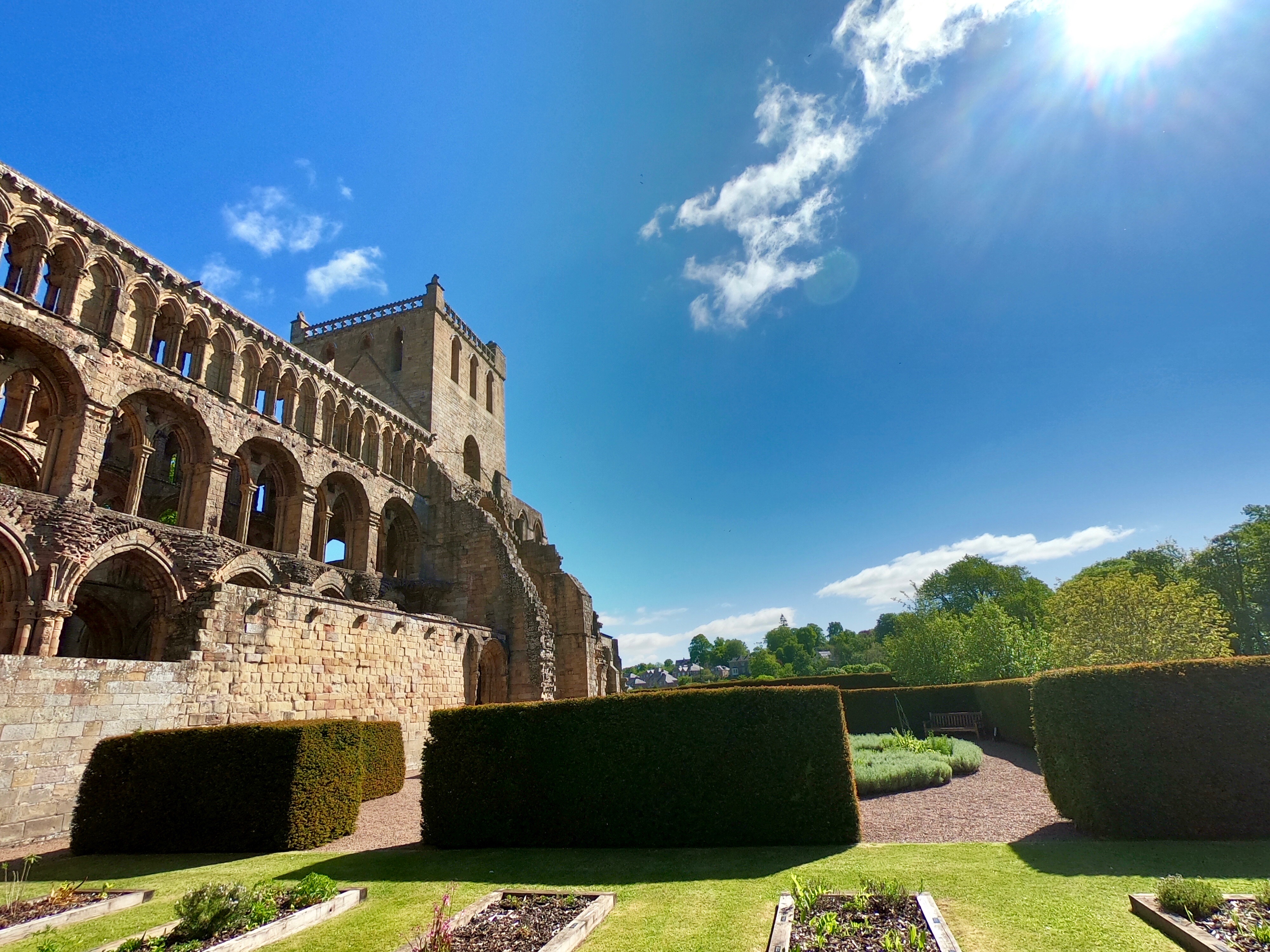
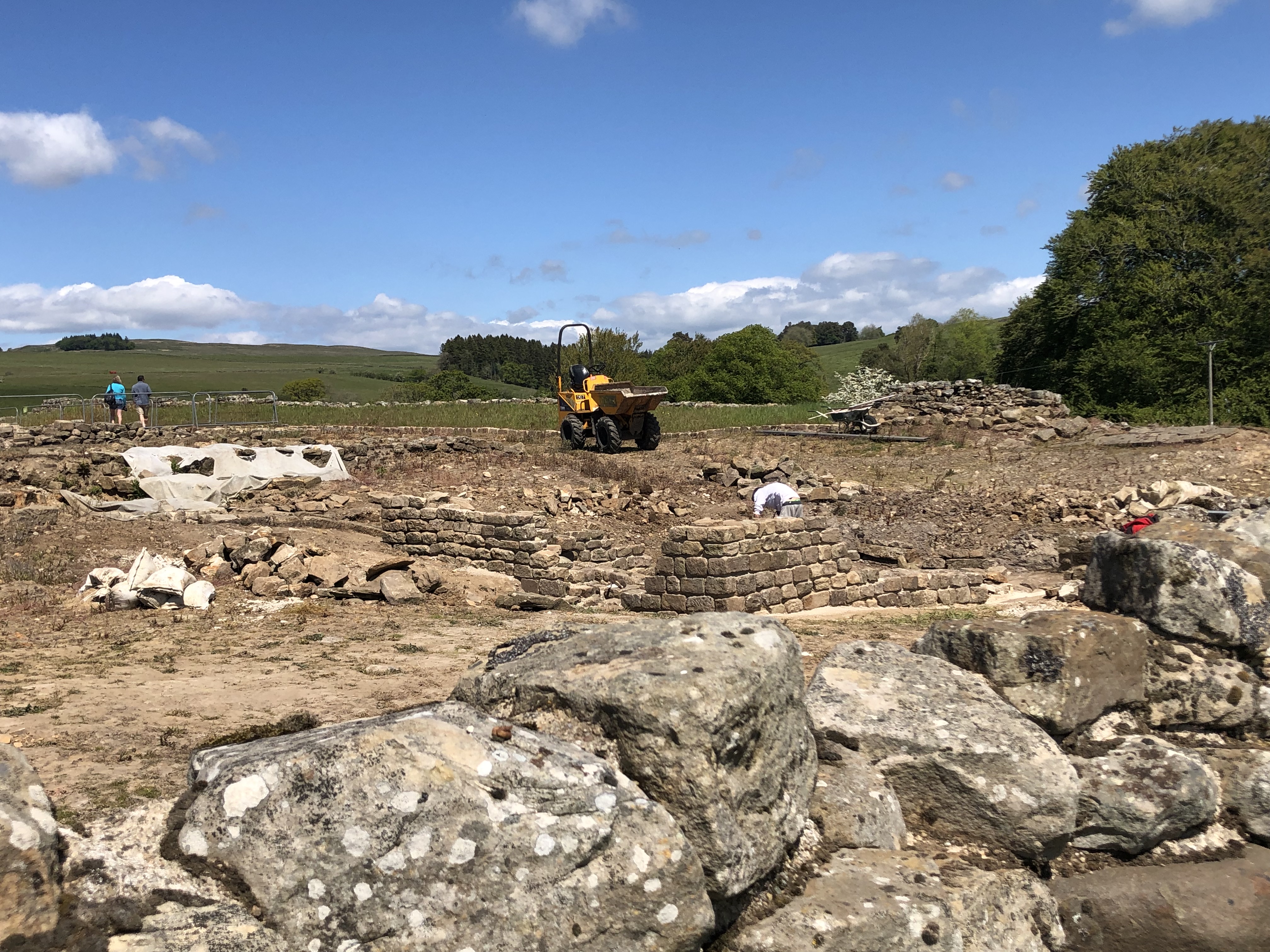
Shortly after passing across the border into England, I visited Hadrian’s Wall, a 73-mile structure built in AD 122. It demarcated the northern boundary of the Roman Empire’s territory, known as Britannia. The wall was heavily guarded, and a number of Roman fortresses and villages dotted the countryside nearby. I visited Vindolanda, one of these fortresses that is still an active archaeological dig-site to this day. I also visited Jedburgh in rural Scotland and explored the remains of Jedburgh Abbey, a ruined 12th century building, where Alexander III married his French bride Yolande. Below are some pictures from this journey.

EU Elections, Edinburgh Castle, and a Historical Parallel

EU Elections

A Group Distributes Flyers in Support of Anti-Brexit Parties on Election Day in Scotland

I write this post at 9:15 PM in Scotland, and it is still bright as day outside of my Airbnb window. Today was quite an important day in Scotland — my first full day of Exploration Summer and EU Election Day! Today, the people of the United Kingdom voted for their Members of European Parliament. Even though the people of the UK voted previously to leave the EU, until such plans are finalized, they must continue to elect representatives to its parliamentary body. A number of polling stations were open around the city, complete with campaign signs out front which I made sure to photograph and document. This afternoon, I encountered a number of EU supporters demonstrating their appetite for a second UK referendum on Brexit. I spoke to one man, waving an EU flag at a busy intersection, and asked him why he supported the EU. “Our most important challenges — peace, climate, economy — are universal problems. Breaking up into nation-states is a troubling and ineffective trend,” he said. In his view, the ideal outcome of the current political situation would be Scotland remaining in an EU-member United Kingdom. In reference to Brexit and its significant support primarily in England, he joked, “The British think they are better than everyone, while the Scots just think they are better than the British.” Results of the election will be announced on Sunday, and I will be on the lookout for any related activities I can observe this weekend.

Edinburgh Castle

Edinburgh Castle

Beyond the political events of today, I spent most of my day in Edinburgh visiting the city’s namesake, Edinburgh Castle. Located at the heart of the city atop an inactive volcano, the protected castle grounds, comprised of a number of structures, is more reminiscent of a fortress than a traditional castle. During the tour, I learned of the important role the structure held in the Wars of Scottish Independence between England and Scotland in the 13th and 14th centuries. These wars, and the events that preceded them, highlight the complicated and ever-changing relationship that has existed between the two countries for centuries.

At one point, a level of trust existed between Scotland and England with such strength that King Edward I of England was invited to select the next King of Scotland during its ascension crisis. The previous King, Alexander III, had died, and his named successor Margaret Maid of Norway, a 3 year old girl at the time, fell ill and died shortly after arrival in Scotland. King Edward named John Balliol the new King, but soon after it became clear that the English crown was controlling his actions. After Balliol attempted to distance himself from the King’s influence, England invaded Scotland and took control of Edinburgh Castle, beginning an English campaign to seize as much of the country as possible.

Historial Parallel

Another story, this one from around 500 years later, represents a potential parallel in human behavior between previous Scottish-England tensions and modern UK-EU tensions. After a period of over 170 years without a royal visit from the monarch to Scotland, people in the country began attributing virtually every negative occurrence in their lives to the Crown. Realizing the potential danger of this trend, King George IV of England enlisted Sir Walter Scott, a prominent novelist in Scotland, to organize his first royal visit to the country. After wearing a kilt upon arrival and spending several days in Scotland, public sentiment of the monarchy experienced a paradigm shift. Is this tendency to attribute negative happenings to an outside and unknown governing body similar to what has occurred in Brexit? After the tour, I spoke to my guide about this, and he confirmed the comparison, explaining that in recent elections, many wanted to leave the EU because pro-Brexit politicians and media attributed the UK’s problems to its membership in the EU.

Tomorrow

Tomorrow, I head south to the Scottish-English border in hopes of learning more about the historical context of this complicated relationship.

The Journey Begins

I have just embarked on my Exploration Summer, a time to “explore academic and cultural interests” made possible by the Robertson Scholar Leadership Program at Duke University. I would like to extend a thank you to Vicki Stocking, the program’s summer coordinator, and Professor Georg Vanberg, my summer mentor, both of whom helped me design my summer and whittle down my many ideas to one.

For me, Exploration Summer is not about changing the world, publishing novel research, or going on a vacation. Instead, it is a time to learn, gathering knowledge about the world as it is and myself as I am. Over the next two months I will be traveling individually (with the exception of a couple visits from family and friends) to two countries – Scotland and Spain – to explore the political happenings in their two incredibly dynamic political environments. I selected these locations due to their recent, and still active, independence movements. In 2014, the Scottish government held a referendum on whether or not Scotland should remain in the United Kingdom. 55% voted to remain. 45% voted to leave. In 2017, the Catalan government held a referendum on whether or not Catalonia, an autonomous community in Spain, should become an independent country, leaving Spain. While over 90% voted to leave, the Spanish government declared the referendum unconstitutional, and there were a number of questions about the validity of the results.

These movements are worthy of extended study and attention in that they shed light on a number of different political issues, from economic policy to immigration, and closely relate to my work in alleviating the political divisions in the United States. As the summer progresses, the focus of my inquiries may evolve. In addition to this blog, my physical deliverable from the summer is still not set in stone. While the initial plan was to capture a series of videos and interviews about these movements, a number of other approaches including historical studies, informal conversations, local news, and relevant literature could also prove useful.

Thanks for joining me. Updates on this website may be frequent at times and sparse at others, contingent upon the frequency of blog-worthy happenings, internet access, and time constraints. If you have any thoughts or suggestions along the way, please reach out.